
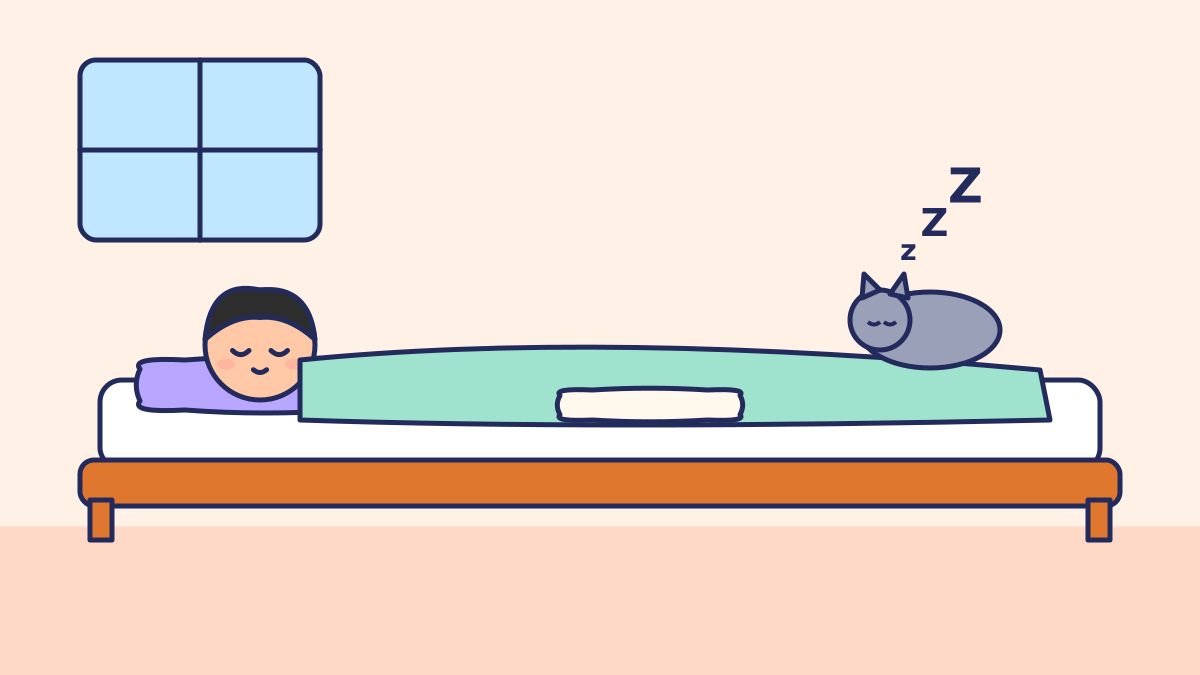
If you sleep face down, your head has to turn to one side so you can breathe. That already twists the neck. Add a thick pillow and you also bend it backwards, like looking up at a high shelf for hours. That is why stomach sleepers are almost always told to go thin and soft — and why the pillow that works for a side-sleeping partner is often the worst choice for them.
Plenty of people sleep on their stomachs comfortably for years. This guide is about making that position as easy on the neck and lower back as possible, and about what to try if you would like to shift towards another position.
Low loft, soft surface
The goal is to keep your head as close to the level of your spine as you can. For most stomach sleepers that means a pillow that compresses to only a few centimetres under the weight of the head. Some people are most comfortable with no head pillow at all and just a folded blanket or the edge of the mattress.
Softness matters as much as height. A thin but firm pillow still pushes the face and neck up, and the edge can press into the cheek or jaw. A soft pillow lets the face sink and the airway stay clear. Look for words like low loft, slim or soft on the label.
| Fill | Stomach-sleeper fit | Notes |
|---|---|---|
| Soft down or down alternative | Often good | Squashes flat under the face and can be pushed aside. |
| Thin, soft polyester fibre | Often good | Affordable and easy to wash; flattens with age, which here is not a problem. |
| Adjustable shredded foam | Good if you remove fill | Take out a lot of the fill until the height is low enough. |
| Low-profile memory foam | Depends | Holds shape, but can feel stiff against the face. |
| Buckwheat, contoured latex, tall foam | Usually poor | Too firm and too tall for most stomach sleepers. |
The hip pillow trick
Stomach sleeping lets the middle of the body sink into the mattress, which can arch the lower back. A thin, flat pillow under the hips and lower belly lifts the pelvis slightly and flattens that arch. Many stomach sleepers who wake with lower-back stiffness find this helps more than anything they do at the head end.
Use something soft and thin — an old flat pillow is ideal. You want a gentle lift, not a hump. If the mattress itself is very soft and lets your hips sink a long way, that is worth addressing too.
Half-stomach, half-side: the three-quarter position
Lots of self-described stomach sleepers actually lie in a three-quarter position: mostly on the front, with one knee drawn up and the body tilted towards one side. This puts less twist on the neck and less arch in the back than lying fully flat.
If that is you, a slightly fuller pillow may be comfortable, especially under the side of the face nearest the mattress. Hugging a body pillow in front of you can help you settle into this position and stay there. Because you are part way to side sleeping, the combination sleeper guide may suit you better than this one.
Shifting positions gradually
Some people want to move away from stomach sleeping, often because of neck stiffness or because a doctor has suggested it for another reason. Positions are habits, and habits change slowly. A few approaches people find useful:
- Start in the three-quarter position with a body pillow in front of you, so the familiar feeling of pressure on the front is still there.
- Put a pillow behind your back so that rolling onto your front is less automatic.
- Match your head pillow to the new position rather than keeping the flat one. A side sleeper on a stomach sleeper's pillow will be uncomfortable and roll back.
- Expect it to take weeks, not nights. Waking up on your stomach is normal while you adjust.
Stomach sleeper checklist
- Pillow compresses to a few centimetres, or none at all.
- Soft enough that your face sinks rather than being pushed up.
- Thin pillow under the hips if your lower back aches.
- Breathable cover — your face is pressed into it all night.
- Wash cases often; face-down sleeping transfers skin oils and skincare onto fabric quickly. Our washing guide covers pillows and cases.
Frequently asked questions
Is stomach sleeping bad for you?
It is a common and often comfortable position. The main drawback is the neck rotation it requires, which some people feel as stiffness. A thin pillow and a hip pillow reduce the strain. If you have ongoing neck or back pain, a healthcare professional can advise on your situation.
Should I put my arms under the pillow?
Lots of stomach sleepers do, but arms raised above the head for hours can lead to tingling or shoulder discomfort. Arms by your sides or bent at shoulder height is usually easier on the shoulders.
Can I use a baby or toddler pillow?
Some adults like the low height of small pillows, but they can be too narrow to stay under your head when you turn. A full-size, low-loft adult pillow is usually more practical.
Related articles
-
 Fit & sizing
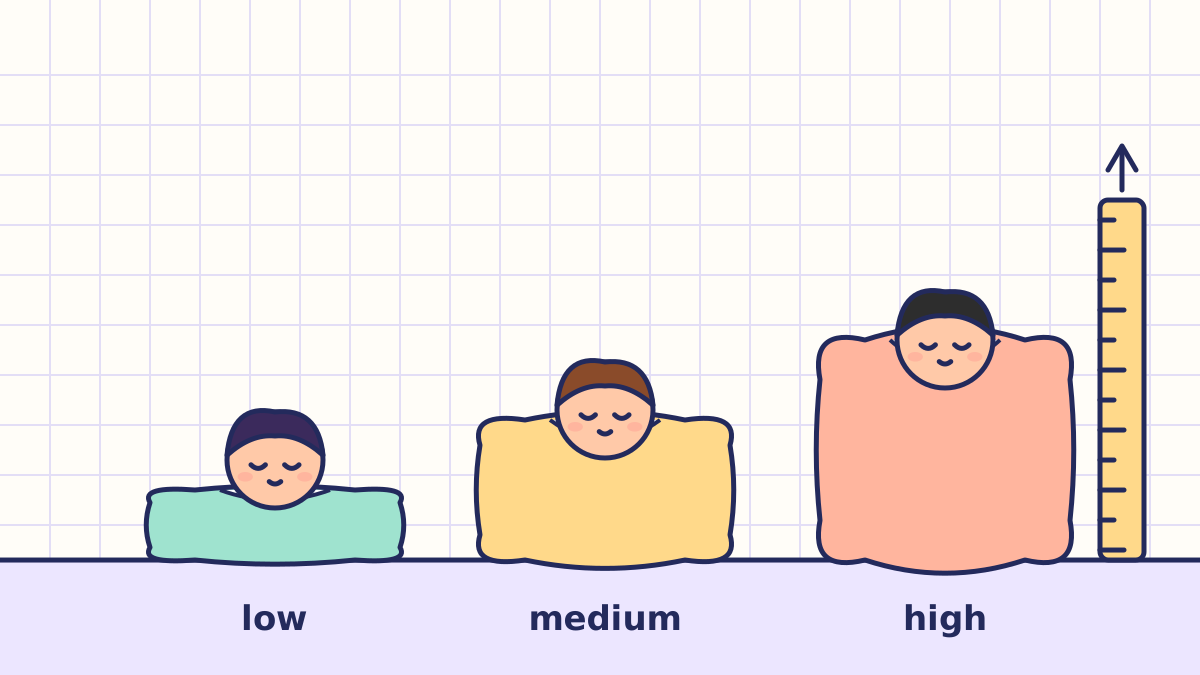
Loft vs firmness: the two numbers that decide how a pillow feels
A tall pillow can still be soft and a thin one can be firm. Understanding the difference saves a lot of bad nights.Read the guide → -
 Combination sleeping
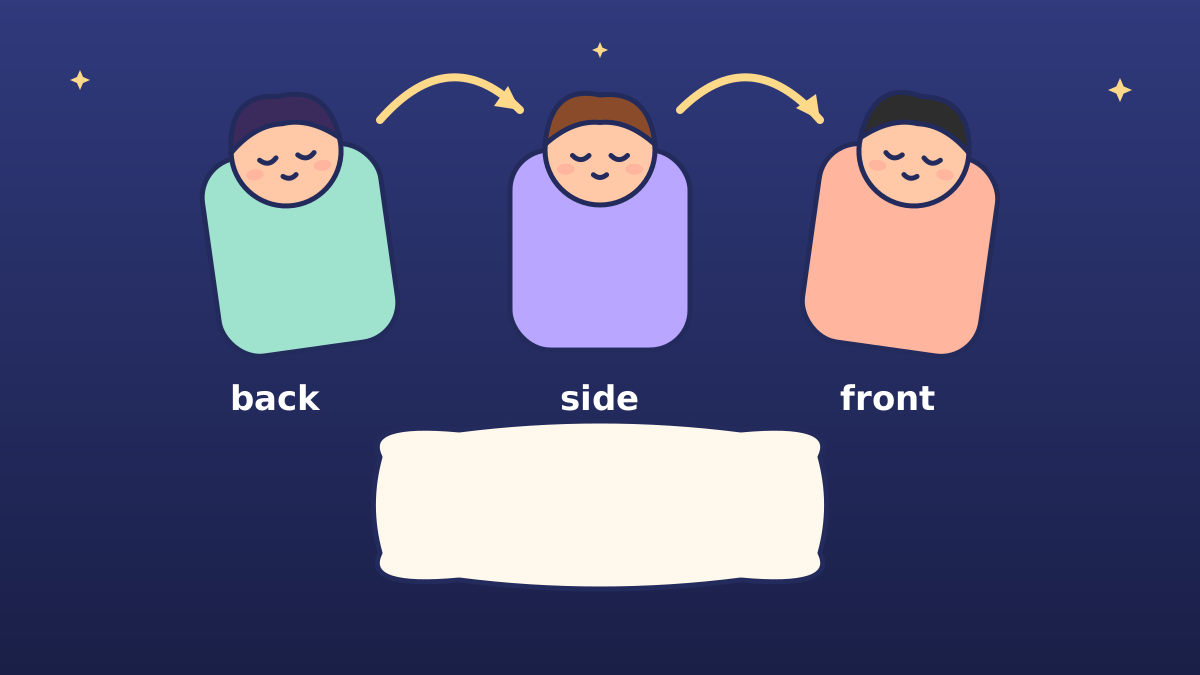
Combination sleepers: one pillow for a night of rolling around
If you start on your back and wake on your side, you need a pillow that can do both.Read the guide → -
 Materials
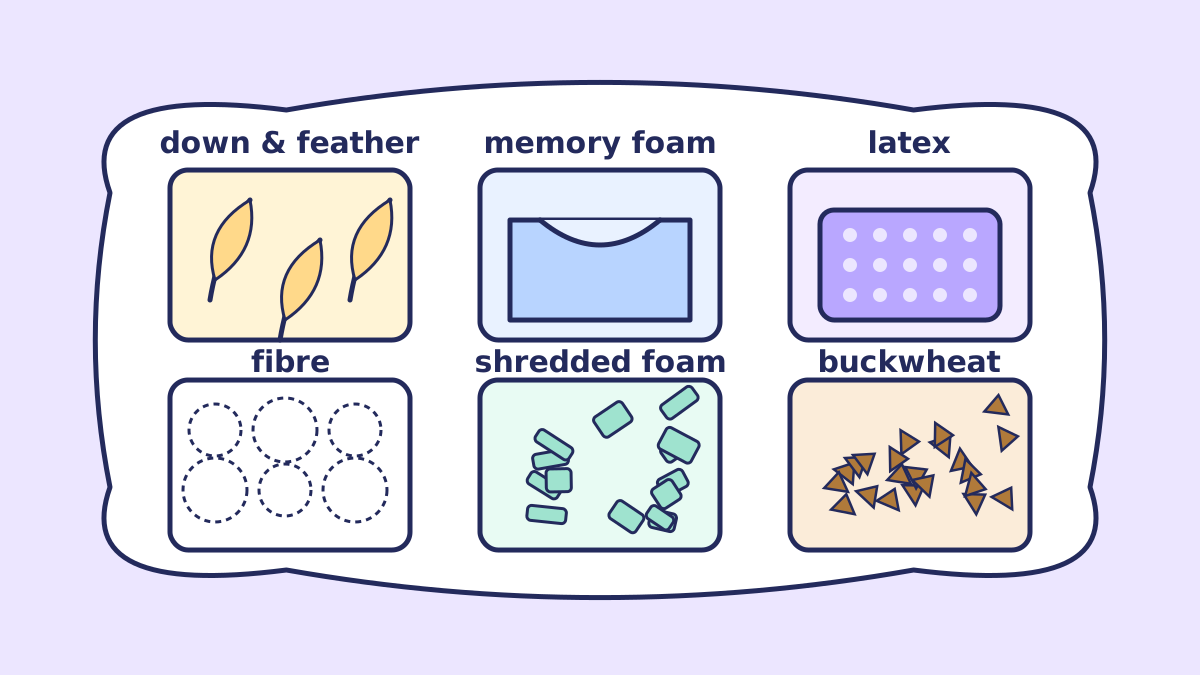
Pillow fills explained: down, feather, foam, latex, fibre and buckwheat
What is actually inside a pillow, and how each fill feels, sleeps and ages.Read the guide →