
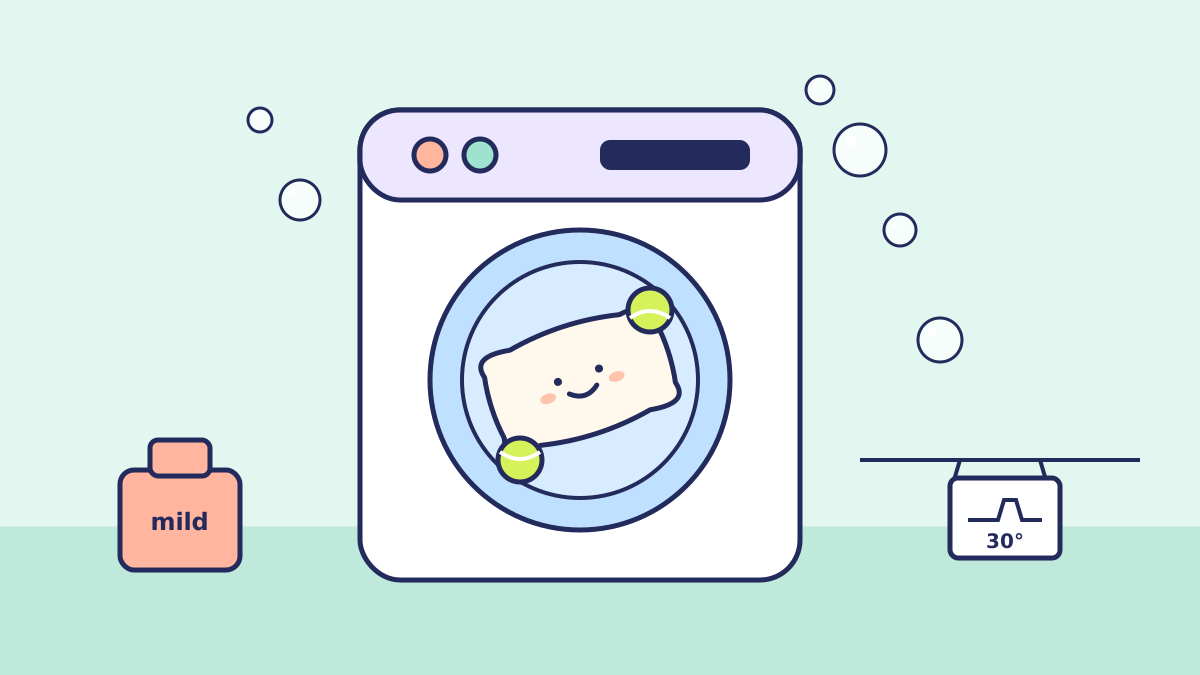
Your pillow spends a third of every day pressed against your face and hair, soaking up sweat, skin oils and whatever skincare you went to bed in. Pillowcases take the worst of it, but the pillow itself still needs attention now and then. How you clean it depends almost entirely on what it is filled with — and the first step is always the same: read the care label.
Step zero: read the care label
Pillow labels use the standard laundry symbols: a tub for washing (with dots or a temperature for heat), a square with a circle for tumble drying, and a crossed-out symbol for "do not". If the label says spot-clean only, believe it. Manufacturers know how their fill and stitching hold up, and washing against instructions can void a warranty or exchange.
If the label has been cut off, identify the fill (squeeze it, look through the fabric, unzip if possible) and use the fill-by-fill advice below conservatively.
| Fill | Usual method | Drying |
|---|---|---|
| Polyester fibre / down alternative | Machine wash, gentle cycle, mild detergent | Tumble dry low with dryer balls |
| Down and feather | Machine wash gentle, small amount of mild or down-specific detergent | Tumble dry low for a long time until fully dry |
| Solid memory foam | Spot-clean and air; wash the removable cover | Air dry flat, out of direct heat |
| Latex | Spot-clean and air; wash the cover | Air dry away from direct sunlight |
| Shredded foam | Check label — many are cover-wash only | Low heat or air dry if washable |
| Buckwheat | Empty hulls, wash the cover, air the hulls | Refill once the cover is completely dry |
Machine washing fibre, down and feather pillows
- Strip it. Remove the case and any protector and wash those separately.
- Check the seams. Repair any small holes first, or the fill will escape into the machine.
- Balance the load. Wash two pillows together if they fit, or add a couple of towels. In a top-loader with a central agitator, place pillows vertically to reduce twisting. Front-loaders are usually gentler on pillows.
- Go gentle. Use a gentle or delicates cycle, lukewarm or the temperature on the label, and a small amount of mild liquid detergent. Too much soap is hard to rinse out of fill.
- Rinse twice. An extra rinse helps remove detergent from dense fill.
- Spin well. An extra spin gets more water out and cuts drying time.
Drying: the step that matters most
A pillow that is slightly damp in the middle can develop mildew and a musty smell, and down that dries in clumps stays clumped. Drying properly is where most pillow-washing attempts go wrong.
- Tumble dry on low heat. High heat can scorch fibres or melt synthetic fill.
- Add wool dryer balls or clean tennis balls to break up clumps as the pillow tumbles.
- Take the pillow out every half hour or so, fluff it by hand and pull apart any clumps.
- Keep going longer than seems necessary. Down pillows in particular can take several cycles. Squeeze the middle: if you feel any coolness or clumping, it is not done.
- Finish with a few hours of air drying in a warm, well-ventilated room.
Cleaning foam and latex
Solid foam and latex hold water like a sponge and can tear when wet and heavy, so most should never go in a machine. To freshen one:
- Remove and wash the cover according to its label.
- Vacuum the pillow with an upholstery attachment.
- Spot-clean marks with a cloth dampened in water and a drop of mild detergent, dabbing rather than scrubbing. Use as little water as possible.
- Let it air dry completely, flat, in a ventilated room. Latex should be kept out of direct sunlight, which can degrade it.
How often to wash what
- Pillowcases: about weekly, more often if you have oily skin, acne, use heavy hair products or have been ill.
- Pillow protectors: every month or two, or whenever you wash other bedding in bulk.
- Washable pillows: a couple of times a year is a common rule of thumb.
- Non-washable pillows: air and vacuum every few months; rely on a protector to keep them clean.
A zippered pillow protector between the pillow and the case is the single easiest way to reduce how often you need to wash the pillow itself. It also helps if you have a dust mite allergy, since tightly woven protectors act as a barrier.
Some stains and smells mean it is time to replace rather than wash. Our pillow replacement guide covers the signs.
Frequently asked questions
Can I use bleach on a white pillow?
Avoid bleach unless the care label allows it. It can weaken fabric and damage down and some synthetic fills. For yellowing, a normal wash with a little extra detergent is usually as much as the pillow can handle.
Why did my pillow come out lumpy?
Usually it is not fully dry. Put it back in on low heat with dryer balls and keep fluffing between cycles. If the fill has permanently clumped after several attempts, it may be at the end of its life.
Can I dry a pillow outside?
Fibre, down and feather pillows can be finished off on a line on a dry, breezy day, but getting them fully dry in the middle outdoors can take a long time. Keep latex out of strong sun.
Related articles
-
 Care
CareWhen to replace your pillow: the fold test and other honest signs
Pillows do not come with an expiry date, but they do give clues. Here is how to read them.Read the guide → -
 Materials
Pillow fills explained: down, feather, foam, latex, fibre and buckwheat
What is actually inside a pillow, and how each fill feels, sleeps and ages.Read the guide → -
 Temperature
Pillows for hot sleepers: keeping your head cool all night
If you flip your pillow to the cold side every night, this one is for you.Read the guide →