
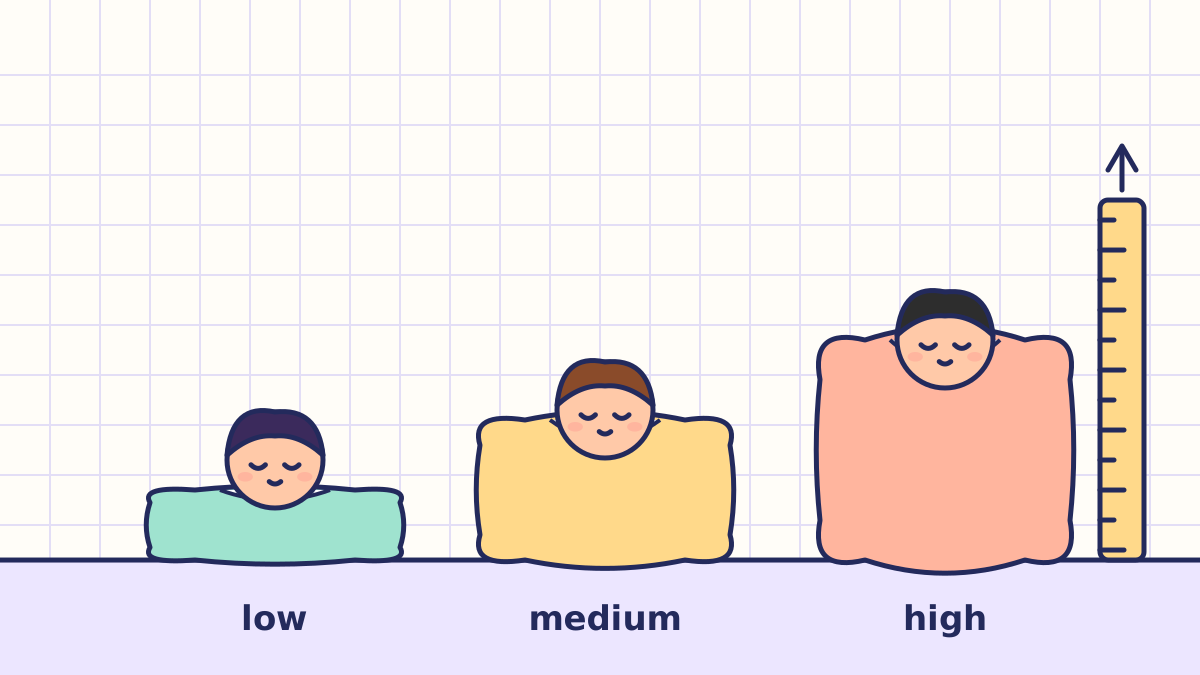
Pillow descriptions throw around "loft", "firmness", "support" and "plush" as if they all meant the same thing. They do not. Loft is about height; firmness is about how much the pillow resists being squashed. You need both numbers to predict where your head will actually end up at 3am — and that final resting height is what your neck cares about.
What loft means
Loft is the height of a pillow sitting on a flat surface with nothing on it. Retailers usually group it into low, medium and high. Exact cut-offs vary between brands, but a rough guide is:
- Low loft: under about 7–8 cm (around 3 inches).
- Medium loft: roughly 8–13 cm (around 3 to 5 inches).
- High loft: above about 13 cm (5 inches or more).
Measure your own pillow by laying it on a table, placing a ruler upright beside the middle, and resting a flat book lightly on top so you read the height at the peak rather than the fluffiest wisp of fill.
What firmness means
Firmness is how strongly a pillow pushes back. A soft pillow lets your head sink in a long way; a firm one barely gives. Brands describe it with words, not a standard scale, so "medium" from one maker may feel like "firm" from another.
A home test: press your palm into the middle of the pillow with about the pressure of a resting head (lighter than you might think — an adult head weighs roughly as much as a bowling ball, but spread over a wide area). Notice how far your hand sinks and how quickly the pillow pushes back. A soft pillow swallows most of your hand; a firm one leaves you barely below the surface.
Why the two combine
What matters in bed is the compressed height: how high your head sits once it has sunk in. That depends on both numbers together.
| Soft | Medium | Firm | |
|---|---|---|---|
| Low loft | Very low — stomach sleepers | Low — stomach or small-framed back sleepers | Low but unyielding — can feel hard |
| Medium loft | Low-medium — stomach or back | Medium — many back and combination sleepers | Medium-high — back or narrow-shouldered side sleepers |
| High loft | Medium — plush feel, can suit back sleepers who like to sink | High — side sleepers | Very high — broad-shouldered side sleepers |
This is why a "high loft" down pillow can end up sitting lower under your head than a "medium loft" latex one. It is also why reading only one of the two numbers leads so many people to buy the wrong thing.
Other things that change the compressed height
- Your mattress. On a soft mattress your shoulders and body sink, so you need less pillow height. On a firm one you need more.
- Your head and body size. A heavier head compresses a pillow more. Broader shoulders create a bigger gap for side sleepers to fill.
- Time. Down and fibre flatten over the night and need fluffing in the morning. Memory foam softens as it warms. A pillow can feel different at midnight than at 6am.
- Age. All pillows lose loft as they wear. An old pillow of the right model may still be the wrong height.
- Pillow protectors and cases. A thick quilted protector adds a little height and firmness; a tight case can compress a pillow noticeably.
A simple way to find your target
- Decide your main sleep position (see the combination sleeper guide if you are not sure).
- For side sleeping, measure from the outside of your shoulder to the side of your head; that is the compressed height to aim for.
- For back sleeping, aim for a height where your face points at the ceiling.
- For stomach sleeping, aim for as low as you find comfortable.
- Test your current pillow and note whether it is too high, too low or right. That tells you which way to move on loft and firmness when you shop.
Our homepage has a quick pillow matcher that walks through these same questions and suggests a starting range. It is a rough guide, not a prescription: comfort is personal.
Frequently asked questions
Is a firmer pillow more supportive?
Not necessarily. Support means keeping your head in line with your spine. A firm pillow that is too tall is unsupportive in that sense, and a soft pillow of the right compressed height can be very supportive.
Why do product listings give different heights for the same pillow?
Some brands measure a freshly fluffed pillow, others measure after compression or after shipping. Treat listed heights as approximate and check the return or exchange terms before buying.
Can I change a pillow's loft?
Adjustable pillows let you remove fill. With down or fibre, a pillow protector or thin second pillow can raise height slightly. Solid foam cannot be adjusted.
Related articles
-
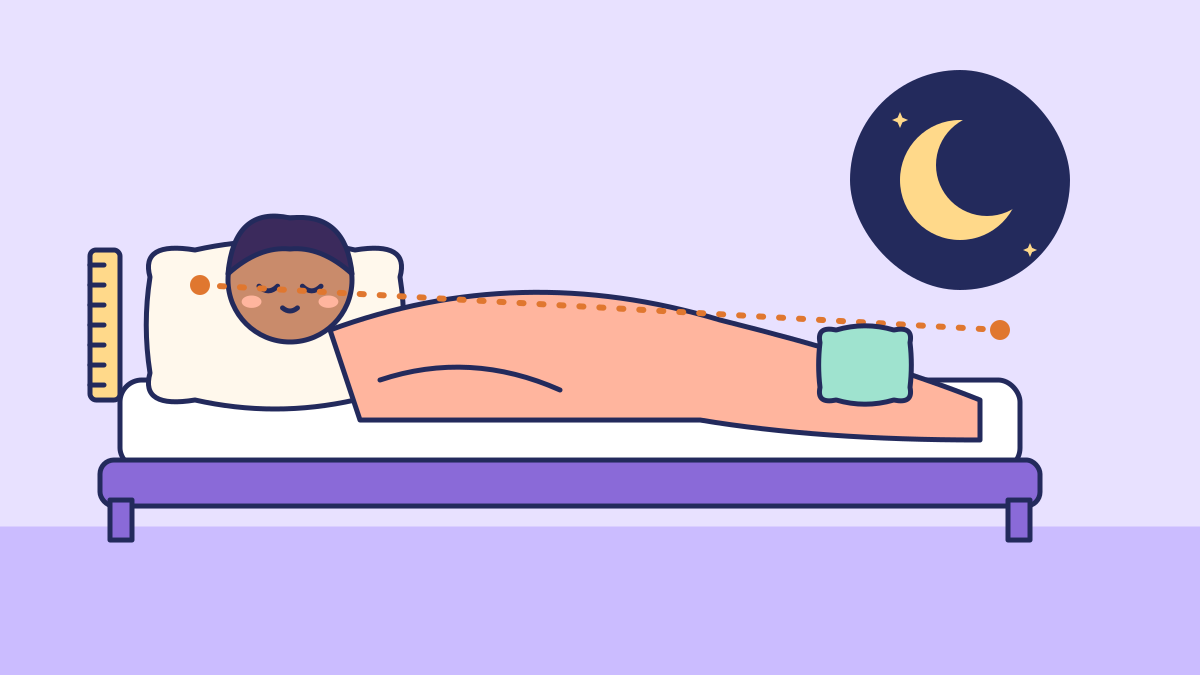 Side sleeping
The side sleeper's pillow guide: filling the gap between ear and mattress
Side sleepers need the tallest, most supportive pillow of anyone. Here is how to work out how tall.Read the guide → -
 Back sleeping
Back sleepers: finding a pillow that supports your neck without pushing your chin down
Back sleepers need less height than side sleepers, but more shape. The trick is supporting the neck curve.Read the guide → -
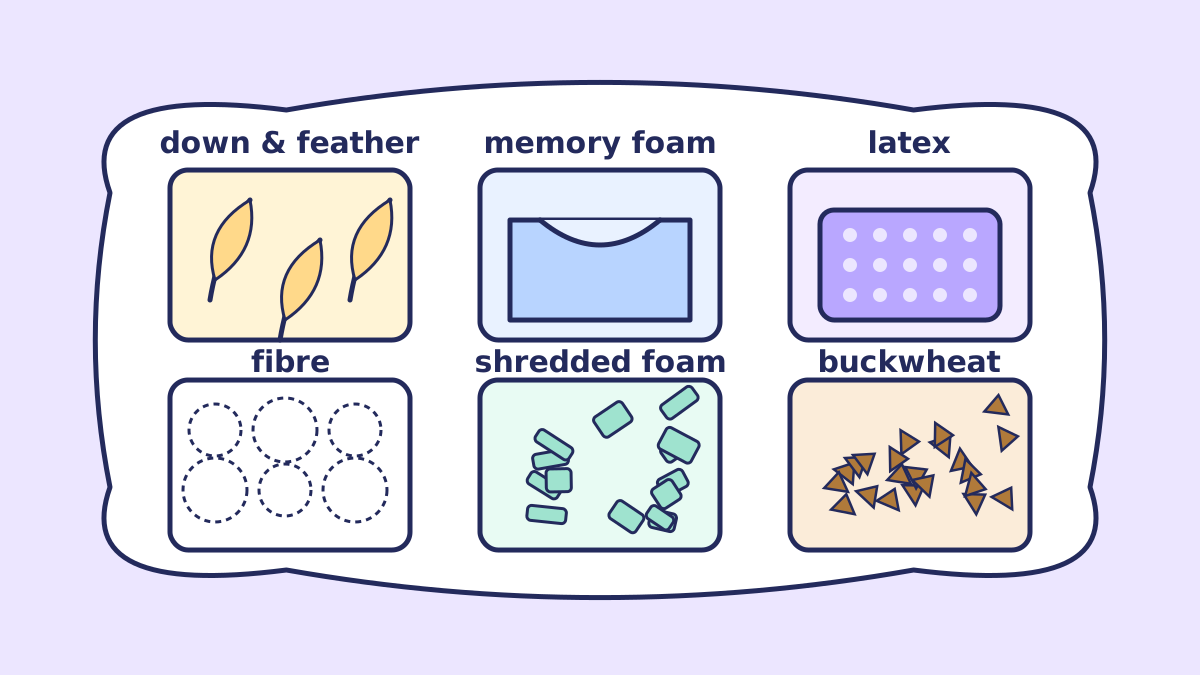 Materials
Pillow fills explained: down, feather, foam, latex, fibre and buckwheat
What is actually inside a pillow, and how each fill feels, sleeps and ages.Read the guide →