
Home / Articles / Side sleeping
The side sleeper's pillow guide: filling the gap between ear and mattress
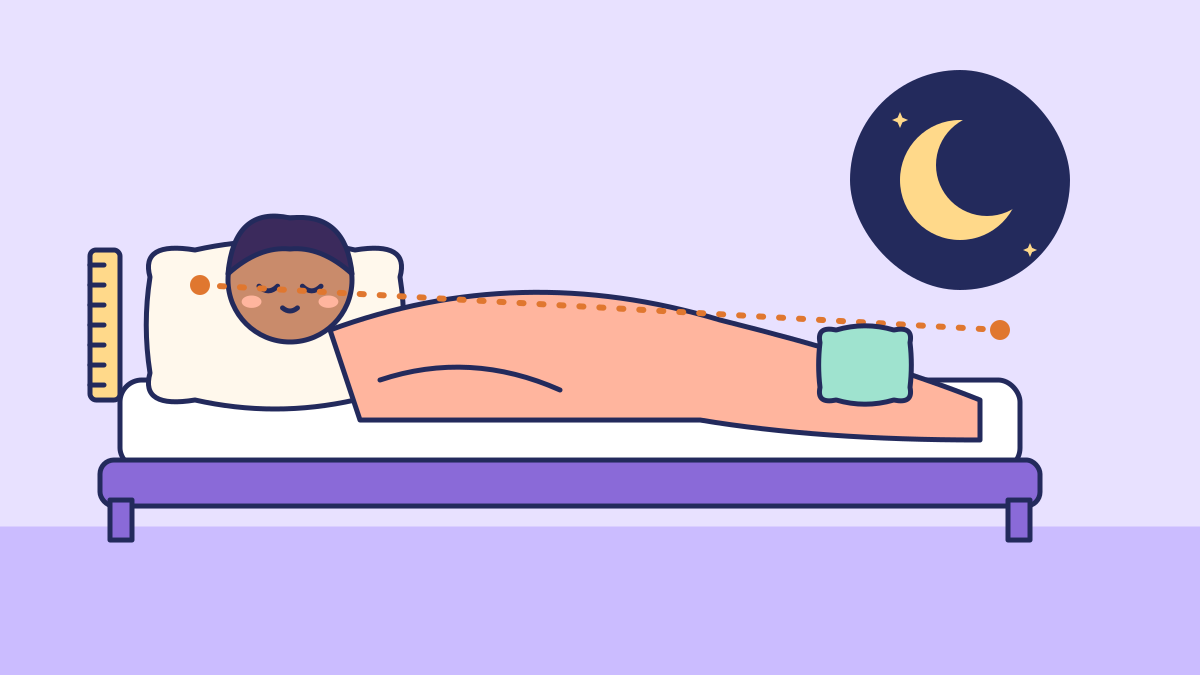
Lie on your side and there is a surprisingly large space between your ear and the mattress — roughly the width of your shoulder. A pillow's main job for a side sleeper is to fill that space so your head sits in line with the rest of your spine instead of drooping down or being propped up. Get the height right and most other choices become matters of taste.
Side sleeping is the most common adult sleep position, and it is also the one where a flat, worn-out pillow shows up fastest. If you wake with a stiff neck on one side, a dead arm, or you catch yourself folding your pillow in half at 3am, the pillow is probably too low. This guide explains how to work out the height you need and what to look for once you know.
Why side sleepers need the most loft
"Loft" is simply the height of a pillow when nothing is resting on it. What matters in bed is the height that is left once your head has pressed it down, which is always less. For side sleepers that compressed height has to bridge the distance from the outside of the shoulder to the side of the head. On most adults that is somewhere around 10 to 15 centimetres, which is why side-sleeper pillows are usually described as medium-high to high loft.
A pillow that squashes to half its height under your head leaves your neck bent sideways all night. The muscles on the upper side of the neck stretch while the lower side shortens. One night is harmless; months of it are a common reason people describe waking "stiff" rather than rested.
| If you… | Lean towards | Why |
|---|---|---|
| Have broad shoulders | Higher loft | A wider gap between ear and mattress needs more fill to bridge it. |
| Have narrow shoulders or a small frame | Medium loft | Too tall a pillow tilts the head upwards instead. |
| Sleep on a soft or pillow-top mattress | Slightly lower loft | Your shoulder sinks in, so the gap shrinks. |
| Sleep on a firm mattress | Slightly higher loft | Your shoulder stays up, so the gap stays wide. |
| Sleep with an arm under the pillow | Medium loft, softer surface | Your arm adds height and needs room to rest without pins and needles. |
Measuring your own gap
You do not need special tools. Stand side-on against a wall with your shoulder touching it and your head held naturally upright, looking straight ahead. Ask someone to measure from the wall to the side of your head just above the ear. That number is a rough target for how tall your pillow should be once compressed. A tape measure and a helper take about thirty seconds.
Then look at the pillow you have now. Lay it on your bed, rest your head on it on your side, and ask your helper to check whether your nose lines up with the middle of your chest. If your chin tips towards the mattress, you need more height. If your head is pushed up towards the ceiling, you need less.
Which fills tend to suit side sleepers
Because side sleepers need height that does not collapse overnight, the fill matters more than it does for anyone else. A few patterns hold up well:
- Adjustable shredded foam or shredded latex. You can remove or add fill until the height is right, which is useful when you are between sizes. Expect to fluff it daily.
- Solid memory foam or latex, often contoured. These keep their height all night. Contoured "cervical" shapes have a raised edge for the neck and a dip for the head; some people love them, others find them too rigid.
- Dense down or down-alternative "firm" pillows. These can work if you like a squishy feel, but look for the word firm or extra firm and be prepared to fluff and refold.
- Buckwheat hulls. Very supportive and mouldable, but heavy and noisy. Try one before committing if you can.
Soft, low-fill down and cheap polyester fibre pillows are the ones that most often disappoint side sleepers, because they compress too far and flatten within months. See our guide to pillow fills for the trade-offs of each material in more detail.
Shape, size and the knee pillow trick
A gusseted pillow — one with a fabric strip around the side walls, like a box — holds its height edge to edge instead of tapering to a thin rim. That matters for side sleepers who drift towards the edge of the pillow during the night.
Standard size is usually enough for one sleeper who stays put. If you hug your pillow or switch sides a lot, a king-length pillow gives you room to roll without landing on the thin end.
Many side sleepers also find that a pillow between the knees keeps the top leg from dragging the hips and lower back into a twist. Any spare pillow will do; purpose-made knee pillows are just shaped to stay put.
Signs your side-sleeping pillow is wrong
- You fold the pillow over or stack a second one most nights.
- You wake with the lower shoulder numb or aching.
- Your neck is stiffer on one side than the other in the morning.
- You sleep with your arm jammed under the pillow to prop it up.
- The pillow fails the fold test described in our replacement guide.
Give any new pillow a fair trial before judging it. Your neck has adapted to your old one, so the first few nights on a better height can feel odd. Our guide to trying a new pillow properly explains how to tell a settling-in period from a genuine mismatch.
Frequently asked questions
Should side sleepers use two pillows?
Stacking two thin pillows can reach the right height, but they tend to slide apart and leave a ridge. It is fine as a stopgap while you work out the height you need; one pillow of the right loft is usually more comfortable long term.
Is memory foam good for side sleepers?
It often is, because it holds its shape through the night. The catch is that foam sleeps warmer than many fills and cannot be adjusted unless it is shredded. Check the height carefully, since a solid block cannot be made taller or shorter.
My pillow is the right height but my shoulder still hurts. Why?
The mattress may be too firm for your shoulder to sink in, or you may be lying too far onto the shoulder itself. Rolling slightly back so you rest on the back of the shoulder blade helps many people. Persistent shoulder pain is worth getting checked.
Related articles
-
 Fit & sizing
Loft vs firmness: the two numbers that decide how a pillow feels
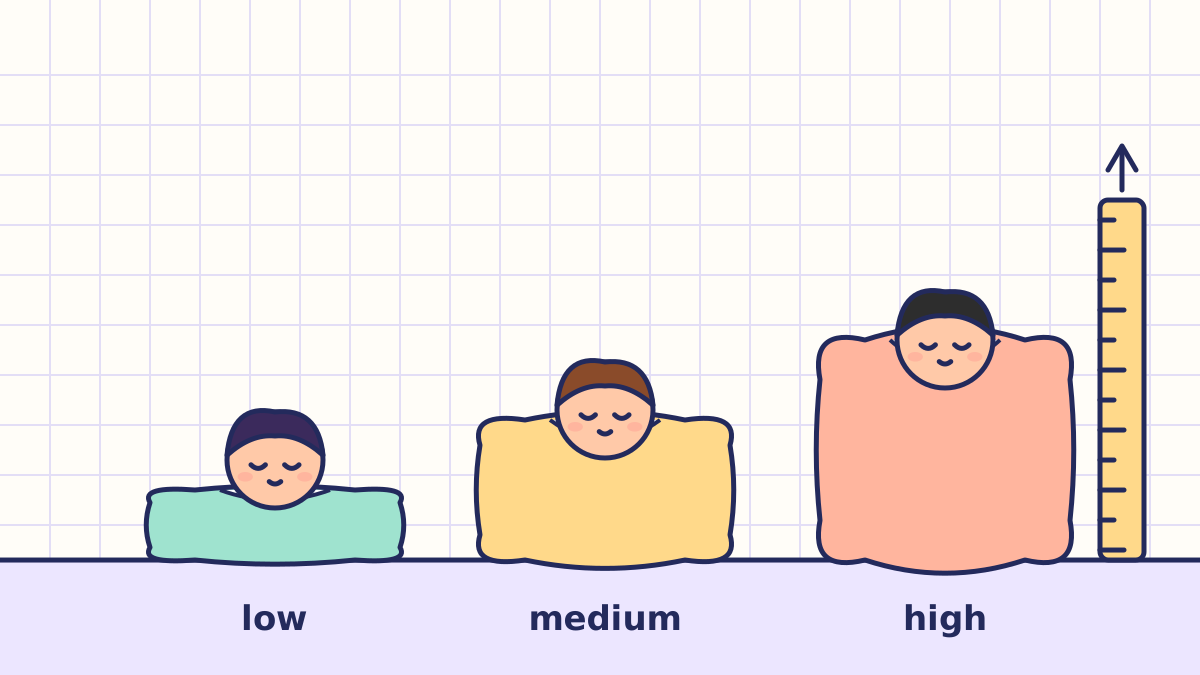
A tall pillow can still be soft and a thin one can be firm. Understanding the difference saves a lot of bad nights.Read the guide → -
 Materials
Pillow fills explained: down, feather, foam, latex, fibre and buckwheat
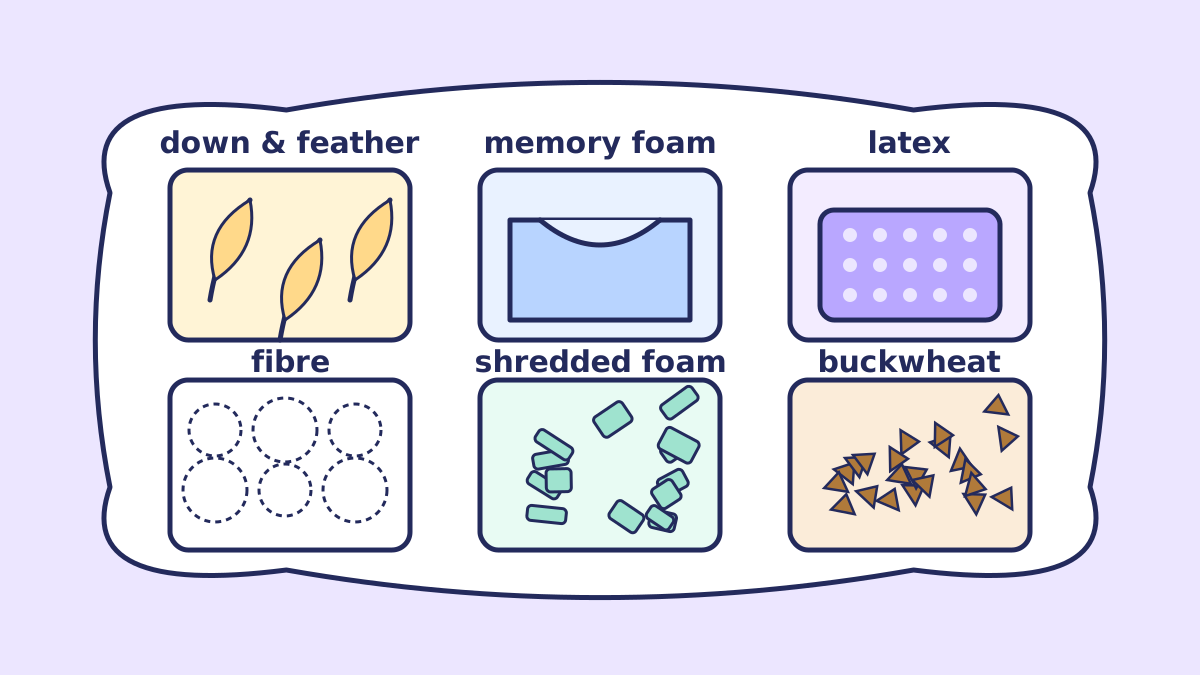
What is actually inside a pillow, and how each fill feels, sleeps and ages.Read the guide → -
 Combination sleeping
Combination sleepers: one pillow for a night of rolling around
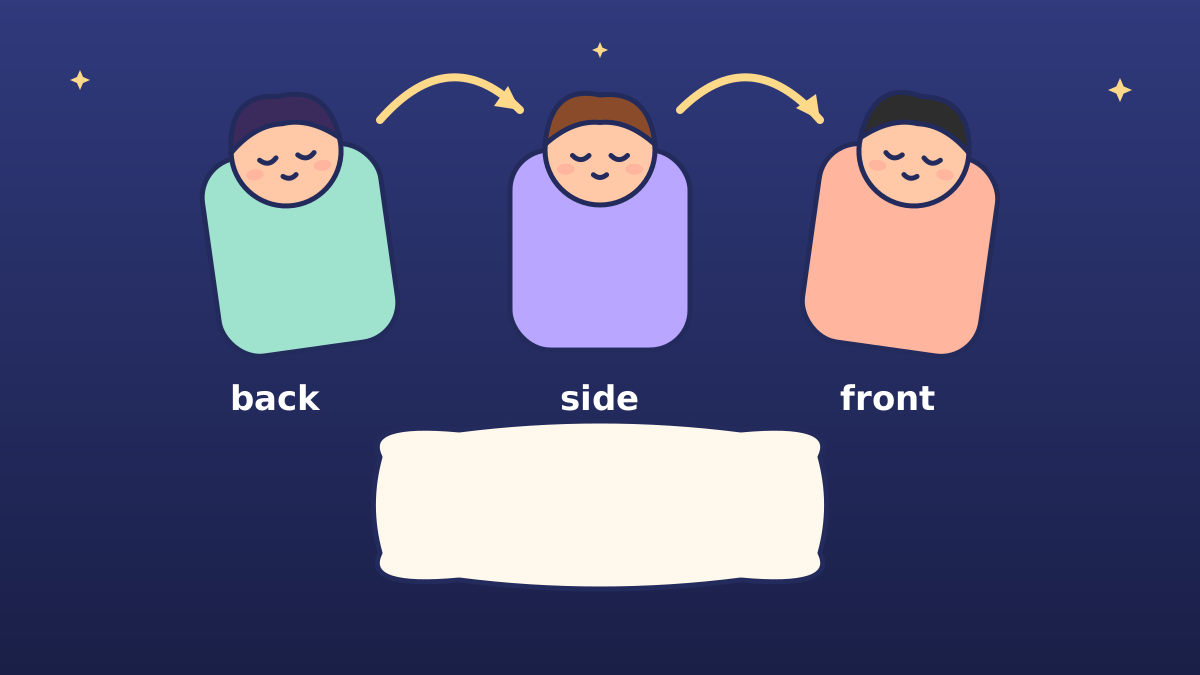
If you start on your back and wake on your side, you need a pillow that can do both.Read the guide →