
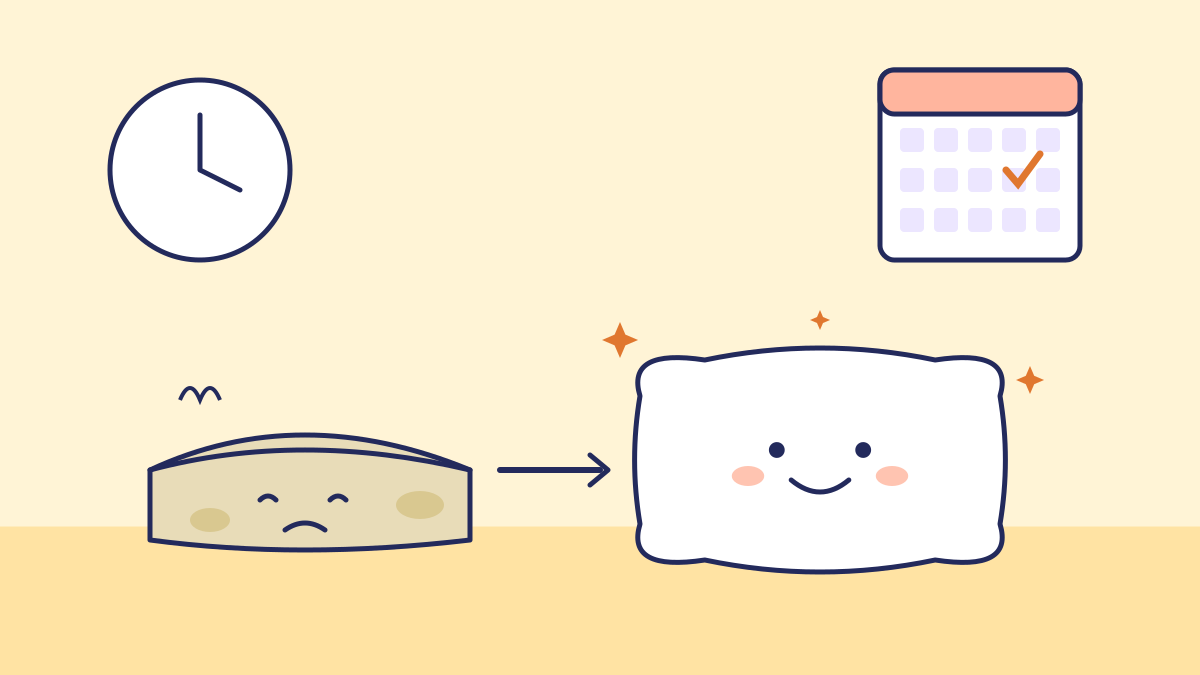
Pillows wear out slowly, which is exactly why most people keep them too long. You adapt to the gradual flattening night by night and never notice the moment it stopped doing its job. There is no fixed date on which a pillow expires, but there are clear signs — and a couple of quick tests you can do right now.
The fold test
This works best for fibre, down and feather pillows.
- Take the case off and lay the pillow flat.
- Fold it in half across the middle, like closing a book.
- Let go.
A pillow with life left in it springs back open, or at least unfolds most of the way. One that stays folded, or slowly slumps open like a tired sandwich, has lost much of its loft and support. For large or very full pillows, fold into thirds, or place a light object such as a shoe on top of the folded pillow and see whether it can push it off.
Foam and latex do not fold the same way, so check them differently: look for permanent dents where your head rests, cracks, crumbling edges, or a noticeable dip that does not recover after a few minutes.
Other signs it is time
- You fold it over, punch it or stack a second pillow every night just to get comfortable.
- There are lumps or empty patches that do not fluff out.
- It has yellow stains that no longer come out in the wash.
- It smells musty or sour even after cleaning and airing.
- You wake with a stiff neck more often than you used to, and it eases during the day.
- Your allergies or stuffiness seem worse at night or first thing in the morning.
- Foam is crumbling, cracked or has a permanent crater.
- Feather quills are poking through the fabric.
- Your sleep position has changed, so the old height no longer suits you.
Stains are not just cosmetic. Yellowing usually comes from sweat and skin oils soaking through the case, which is also what dust mites feed on. A pillow protector slows this down a lot.
Rough lifespans by fill
Lifespans depend on quality, how you sleep, how warm you run and how well you look after the pillow, so treat these as broad tendencies rather than rules:
- Polyester fibre: tends to be the shortest-lived; many people notice flattening within one to two years.
- Down and feather: can last several years with regular fluffing, washing and a protector.
- Memory foam: often a few years before it softens noticeably or develops a permanent dent.
- Latex: generally among the most durable fills if kept out of sunlight.
- Buckwheat: hulls gradually break down into dust; topping up with fresh hulls extends the pillow's life.
A common general rule is to reassess pillows every year or two. That is not a reason to throw out a pillow that still passes the tests; it is a reminder to actually do the tests.
Making a pillow last longer
- Use a zippered protector under the case and wash it regularly.
- Fluff fibre and down pillows every morning to redistribute the fill.
- Rotate and flip the pillow so you are not always compressing the same spot.
- Wash washable pillows correctly and dry them fully. See our pillow washing guide.
- Do not sit or lean on your sleeping pillow as a back cushion; that compresses it far more than your head does.
- Air pillows in a well-ventilated room every so often.
What to do with an old pillow
Most councils and waste services do not accept pillows in household recycling, and charity shops usually cannot take used bedding for hygiene reasons. Check with your local authority, but some better options are:
- Animal shelters. Some accept clean old pillows and bedding for animal beds. Call first.
- Textile recycling. Some textile banks and retailer take-back schemes accept bedding.
- Around the house. Floor cushions, a pet bed, stuffing for draught excluders, a kneeling pad for gardening, or padding when moving furniture.
When you buy a replacement, give it time. Our guide to trying a new pillow explains why the first few nights are not a fair verdict.
Frequently asked questions
Can I restore a flat pillow?
A good wash and thorough tumble dry with dryer balls can revive fibre and down pillows somewhat. Adjustable pillows can be topped up with extra fill. Once a pillow fails the fold test after washing, restoring it is rarely worth it.
Is it unhygienic to keep a pillow for many years?
Over time pillows accumulate skin cells, sweat and dust mites. Protectors and regular washing help a great deal. If a pillow is stained, smelly or seems to worsen allergies, replace it.
Should I replace my partner's pillow at the same time?
Only if theirs is also worn. Different sleepers need different pillows, and there is no need to buy matching ones.
Related articles
-
 Care
CareHow to wash a pillow (and when not to)
Some pillows love the washing machine. Others fall apart in it. Here is how to tell which is which.Read the guide → -
 Materials
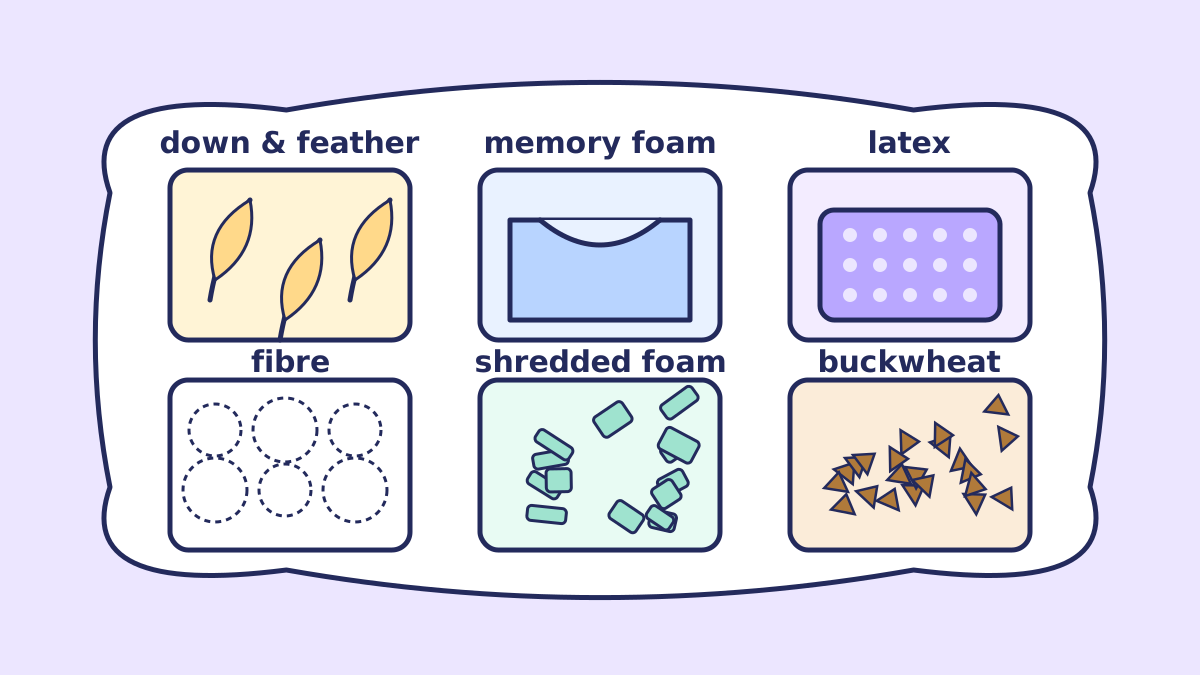
Pillow fills explained: down, feather, foam, latex, fibre and buckwheat
What is actually inside a pillow, and how each fill feels, sleeps and ages.Read the guide → -
 Buying smart
Sleep on it: how to trial a new pillow before you commit
The first night on a new pillow almost always feels wrong. Here is how to tell settling-in from a real mismatch.Read the guide →