
Home / Articles / Back sleeping
Back sleepers: finding a pillow that supports your neck without pushing your chin down
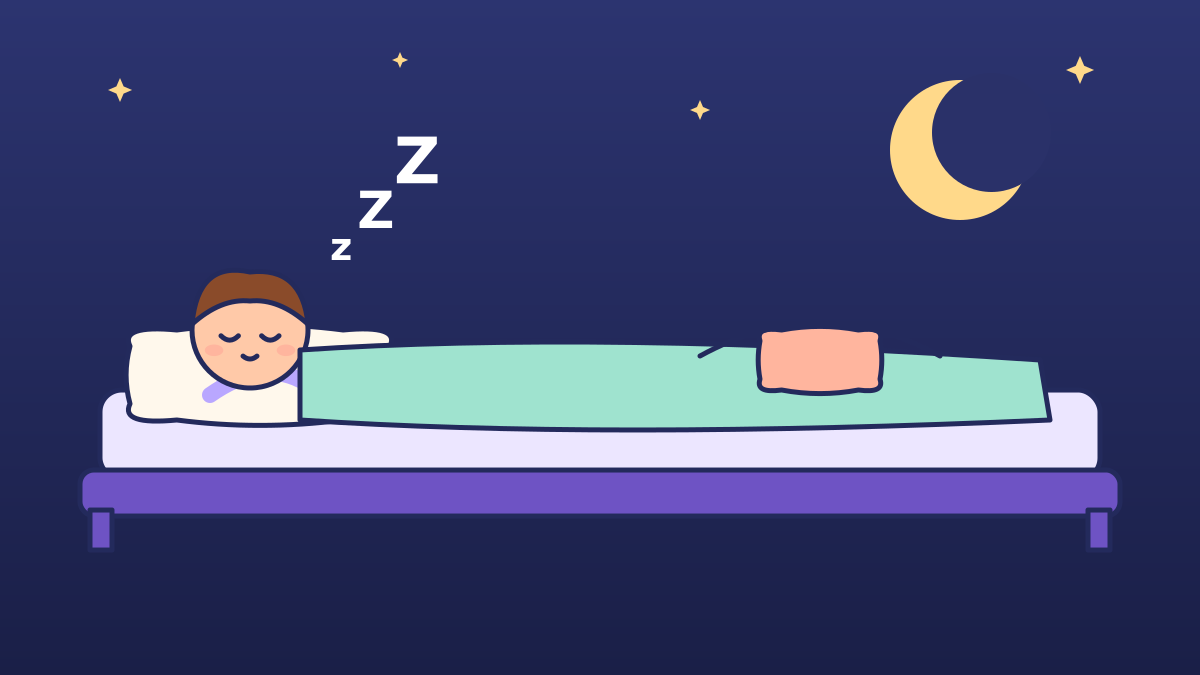
Lying on your back looks like the simplest position to buy for, and in some ways it is. There is no shoulder gap to fill. But your neck has a natural forward curve, and the pillow has to support that curve while letting the back of your head rest comfortably — without shoving your chin towards your chest. Too flat and your head tips back; too tall and you spend the night in a gentle crunch.
This guide covers the height most back sleepers end up needing, the shapes that work, and a few changes that make back sleeping more comfortable for the lower back as well as the neck.
The medium-loft sweet spot
For most people the right back-sleeping pillow sits in the middle of the range: taller than a stomach sleeper would want, shorter than a side sleeper's. As a rough rule, when your head is resting on it your face should point straight up at the ceiling, or very slightly down towards your feet. If you could balance a glass of water on your forehead, you are close.
What changes the answer is the shape of your upper back. People with a more rounded upper back or forward head posture often need a little more height to avoid their head falling backwards. People with a flatter upper back usually need less. Because of that, two back sleepers of the same height can end up happy on quite different pillows.
| When you lie on your back… | What it suggests |
|---|---|
| Your chin tips up and your throat feels stretched | Pillow too low, or too soft under the neck |
| Your chin is pushed towards your chest | Pillow too high or too firm behind the head |
| Your face points at the ceiling and your jaw is relaxed | About right — now judge comfort over several nights |
| There is a gap you can slide a hand into under your neck | Needs more neck support: a contoured shape or a pillow you can mould |
Filling the curve of the neck
Back sleepers benefit from a pillow that is slightly fuller under the neck than under the head. You can get this in three ways:
- A mouldable pillow. Down, feather, shredded foam and buckwheat can all be pushed around so there is more fill under the neck and a shallow dip for the head. Buckwheat is especially good at holding the shape you give it.
- A contoured pillow. These foam or latex pillows have a raised roll along one edge. For back sleeping you usually put the lower roll under your neck; for side sleeping the higher one. Try both edges before deciding.
- A small towel roll. A hand towel rolled into a cylinder and slipped inside the pillowcase along the bottom edge is a cheap way to test whether extra neck support helps before you buy anything.
Firmness matters too. A pillow that is very soft lets the back of the head sink deeply while the neck gets little support. Medium firmness is where most back sleepers land. The loft and firmness guide explains how the two interact.
Snoring and back sleeping
Lying flat on your back lets the tongue and soft tissues of the throat fall backwards, which is why snoring is often worse in this position. Propping the head up with a much taller pillow is a common instinct, but it tends to bend the neck forward without opening the airway much. Raising the whole upper body slightly — with a wedge pillow or by raising the head of the bed — keeps the neck and chest in line.
Loud, regular snoring with pauses, gasps or daytime sleepiness can be a sign of sleep apnoea, which is a medical condition and not a pillow problem. If that sounds familiar, speak to a doctor rather than trying to fix it with bedding.
Helping the lower back too
A pillow under the knees takes some of the arch out of the lower back and lets the muscles there relax. Many back sleepers find this makes a bigger difference to morning stiffness than any change in head pillow. A standard pillow folded in half, a bolster or a purpose-made knee wedge all work. Keep it modest: the aim is a slight bend at the knee, not your feet in the air.
Your mattress plays a role here as well. On a very soft mattress your hips sink and your back sags; on a very firm one there can be a gap under the lower back. Neither is a pillow problem, but both change how your neck feels, so it is worth thinking about the whole setup.
Back sleeper checklist
- Face points to the ceiling, jaw relaxed.
- No gap under the neck, no pressure pushing the chin down.
- Medium loft, medium firmness as a starting point.
- A shape or fill that gives the neck a bit more support than the head.
- A pillow under the knees if the lower back aches.
- If you roll onto your side during the night, a pillow that also works there — see our combination sleeper guide.
Frequently asked questions
Is sleeping without a pillow good for back sleepers?
Some people with a flat upper back are comfortable with a very thin pillow or none at all, but most people's heads tip backwards without one. If you want to try it, go gradually with a thinner pillow first and pay attention to how your neck feels in the morning.
Are cervical pillows only for people with neck pain?
No. They are simply a shape that supports the neck curve. Plenty of people without any pain prefer them. If you do have ongoing neck pain, a physiotherapist can give advice suited to you.
How many pillows should a back sleeper use?
Usually one under the head, plus one under the knees if it helps. Stacking two under the head tends to push the chin down.
Related articles
-
 Side sleeping
The side sleeper's pillow guide: filling the gap between ear and mattress
Side sleepers need the tallest, most supportive pillow of anyone. Here is how to work out how tall.Read the guide → -
 Fit & sizing
Loft vs firmness: the two numbers that decide how a pillow feels
A tall pillow can still be soft and a thin one can be firm. Understanding the difference saves a lot of bad nights.Read the guide → -
 Sleep habits
Sleep hygiene basics: small habits that make a pillow's job easier
Even the perfect pillow cannot fix a 1am phone scroll. The everyday habits that support better sleep.Read the guide →