
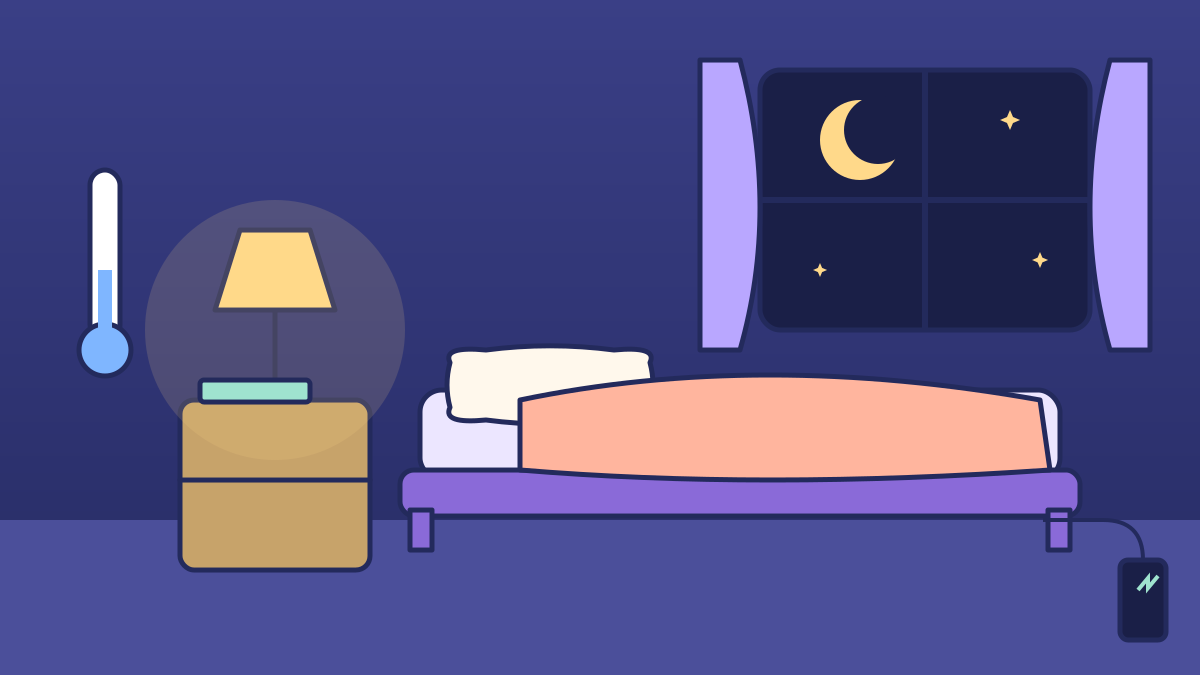
"Sleep hygiene" is a slightly clinical name for the everyday habits and surroundings that make sleep easier to fall into and stay in. None of it is glamorous, and no single habit is a cure. But together they shape how your body winds down, and they are free. A great pillow will do its job better in a bedroom and routine that are on its side.
This article covers general healthy-sleep habits. If you regularly struggle to sleep for weeks at a time, snore loudly with pauses in breathing, or feel very sleepy during the day, talk to a doctor — those can be signs of treatable conditions.
Keep a steady rhythm
Your body clock (circadian rhythm) likes predictability. Going to bed and, especially, getting up at roughly the same time every day — weekends included — is one of the most commonly recommended sleep habits. A big lie-in on Sunday can make it harder to fall asleep that night and leave Monday morning feeling like jet lag.
Most adults need around seven or more hours of sleep a night, though individual needs vary. Work backwards from the time you need to get up and set a rough "lights out" time that gives you that window, plus a bit of time to fall asleep.
Use light on purpose
Light is the strongest signal your body clock receives. Bright light in the morning helps set it; bright light late at night pushes it later.
- Get outside in the morning if you can, even briefly. Daylight is far brighter than indoor lighting, even on a cloudy day.
- Dim the lights in the evening. Lamps instead of overhead lights for the last hour or so before bed.
- Keep screens out of the last stretch. Phones, tablets and laptops combine light with content designed to keep you engaged. Night modes reduce blue light but not the scrolling.
- Keep the bedroom dark. Blackout curtains or an eye mask help if street lights or early sunrise wake you.
Caffeine, alcohol and food
Caffeine can stay in your system for many hours, and people differ widely in how sensitive they are. A common suggestion is to stop caffeine by early afternoon and see whether it helps. Remember that tea, cola, energy drinks and some chocolate contain caffeine too.
Alcohol can make you feel drowsy, but it tends to make sleep lighter and more broken in the second half of the night. Heavy or spicy meals close to bedtime can cause discomfort or reflux when you lie down. A light snack is fine if you are genuinely hungry.
Make the bedroom work for sleep
- Cool: most people sleep better in a cool room. Adjust bedding and nightwear rather than relying on heating.
- Dark: blackout curtains, a mask, or covering the glow of chargers and standby lights.
- Quiet: earplugs, or a steady background sound such as a fan if noise is unpredictable.
- Comfortable: a pillow matched to your sleep position and a mattress that is not sagging.
- Uncluttered: a bedroom that is not also an office or a storage room is easier to switch off in.
- Clean: fresh pillowcases and bedding feel better — see our washing guide.
If you run hot, the fill and cover of your pillow make a noticeable difference. Our guide for hot sleepers covers bedding materials and other cooling ideas.
Build a wind-down routine
A consistent sequence of calm activities before bed acts as a cue that sleep is coming. It does not need to be elaborate. Twenty to thirty minutes of the same few things works for many people: a warm shower, reading a paper book, gentle stretching, writing tomorrow's to-do list so it is out of your head, then lights out.
Daytime matters too. Regular physical activity is associated with better sleep for many people, though very intense exercise right before bed can leave some people wired. Long or late-afternoon naps can make it harder to fall asleep at night; if you nap, keep it short and earlier in the day.
When you cannot sleep
Lying in bed awake and frustrated teaches your brain to associate the bed with being awake. A widely used approach is:
- If you have been awake for what feels like a long time (do not watch the clock), get up.
- Go to another dimly lit room and do something quiet and boring, like reading something undemanding.
- Return to bed when you feel sleepy.
- Get up at your usual time the next morning regardless of how the night went.
Clock-watching tends to make things worse. Turn the clock away from the bed. If sleeplessness continues for weeks, a doctor can help; structured approaches such as cognitive behavioural therapy for insomnia are widely recommended.
Frequently asked questions
Does a new pillow improve sleep?
If your current pillow is the wrong height or worn out, a better-matched one can make you more comfortable, which helps. It will not fix sleep problems caused by habits, stress or medical issues.
Is it bad to use my phone in bed?
It is not harmful in itself, but it often pushes bedtime later and keeps your mind busy. Many people find charging the phone outside the bedroom is the simplest fix.
How long before bed should I stop eating?
There is no single rule. Many people find that finishing a large meal two to three hours before bed is more comfortable, especially if they get reflux.
Related articles
-
 Temperature
Pillows for hot sleepers: keeping your head cool all night
If you flip your pillow to the cold side every night, this one is for you.Read the guide → -
 Buying smart
Sleep on it: how to trial a new pillow before you commit
The first night on a new pillow almost always feels wrong. Here is how to tell settling-in from a real mismatch.Read the guide → -
 Travel
Travel pillows: what actually helps you sleep on planes, trains and road trips
The classic horseshoe neck pillow is not the only option — and often not the best one.Read the guide →