
Travel pillows: what actually helps you sleep on planes, trains and road trips
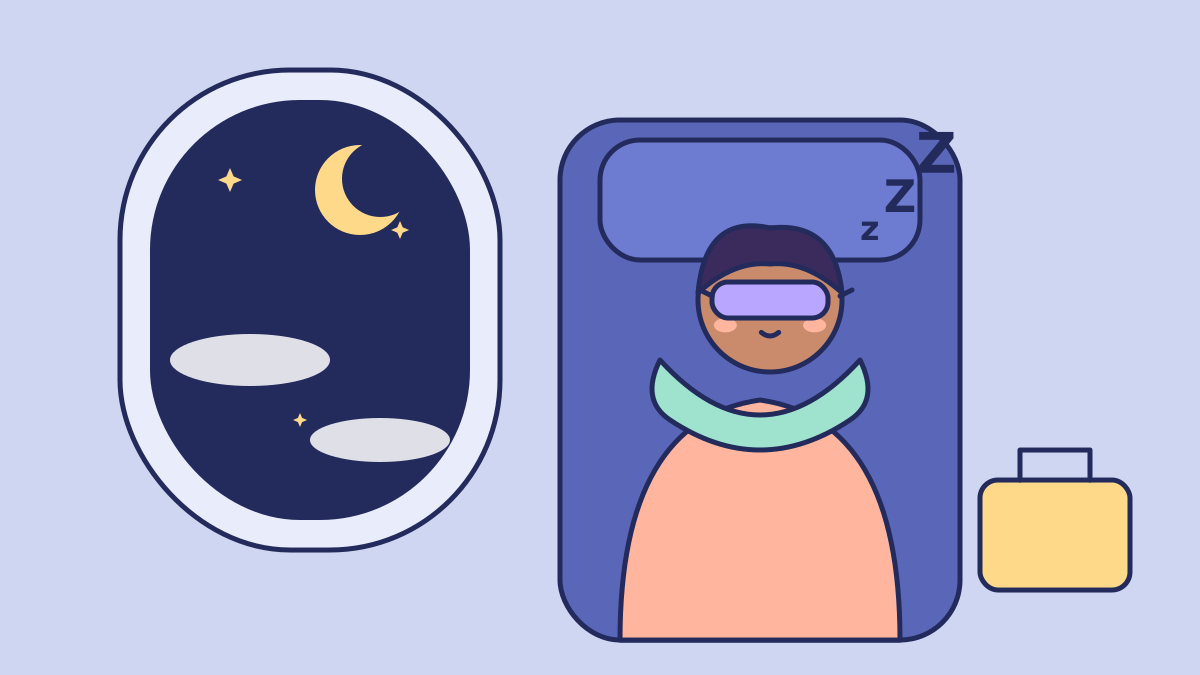
Sleeping sitting up is hard because your head is heavy and your neck muscles relax as you drift off. The moment you fall asleep, your head drops forward or tips sideways, and the jolt wakes you. Every travel pillow is an attempt to catch your head before that happens. Some designs do it much better than others, and the right one depends on where you are sitting and which way your head tends to fall.
Why the classic neck pillow often disappoints
The familiar U-shaped or horseshoe pillow sits around the back and sides of the neck. It is good at stopping your head tipping sideways, but it offers little support in front, which is where many people's heads drop. It can also push the head forward if it is too thick at the back, especially in seats with a forward-curving headrest.
A few adjustments make it work better:
- Turn it around so the thick part sits under your chin. This stops the forward nod, which is the most common problem.
- Turn it sideways so the thick part is on the side your head falls towards.
- Choose a firm one. A soft, squashy neck pillow collapses under the weight of your head.
- Look for one with a clasp or cord at the front to stop it from spreading open.
Other travel pillow designs
| Type | How it works | Best for | Downsides |
|---|---|---|---|
| U-shaped neck pillow | Wraps around the neck | Heads that tip sideways | Weak front support; bulky |
| Wrap or scarf style | A fabric wrap with an internal support that braces the chin on one side | Forward and sideways nodding | Can feel warm; takes practice to position |
| Chin-support collar | A stiff collar that props up the chin all round | Strong forward nodders | Can feel restrictive |
| Inflatable pillow | Blow-up shape, deflates flat for packing | Light packers; adjustable firmness | Can feel plasticky and sweaty; may leak |
| Wedge or window pillow | Fills the gap between your head and the wall or window | Window seats, trains, car passengers | No help in a middle seat |
| Small rectangular pillow | A mini version of a bed pillow | Lumbar support, leaning on a tray table, hotel backup | Does not stop nodding on its own |
Seat and posture tricks
The pillow is only part of it. Where and how you sit makes a big difference.
- Pick the window seat if you want to sleep. You have a wall to lean on and no one climbing over you.
- Recline as much as is allowed and considerate. Even a small recline moves your head's centre of gravity back over your spine so it is less likely to fall forward.
- Support your lower back. A rolled jumper or small pillow in the curve of the lower back stops you sliding down the seat, which is often what makes the head fall forward in the first place.
- Keep feet flat. Your bag under the seat in front can work as a footrest if your feet do not reach the floor comfortably.
- Adjust the headrest wings on seats that have them, folding them forward to cradle your head.
- Use the seat belt over your blanket on flights so cabin crew can see it without waking you.
The rest of the sleep kit
A pillow does little if light and noise keep you awake. A contoured eye mask that does not press on the eyelids, foam earplugs or noise-reducing headphones, a light layer you can put on as the cabin cools, and a refillable water bottle make a good small kit. Avoid heavy meals and lots of alcohol right before you try to sleep; both tend to make sleep lighter and more broken. Our sleep habits guide covers caffeine timing, which matters for long journeys too.
Moving regularly on long trips matters as much as sleeping. Stand, walk the aisle when you can, and flex your ankles in your seat. People with risk factors for blood clots should follow their doctor's advice for long-haul travel.
Bringing your own pillow to a hotel
Hotel pillows are chosen to suit as many guests as possible, which often means medium-soft fibre that is too low for side sleepers. If you are fussy about height, a few options:
- Ask for extra pillows or a firmer one; many hotels keep alternatives.
- Pack a compressible pillow of shredded foam or down that squashes into a small bag and recovers after an hour or so.
- Bring your own pillowcase. A familiar case is light to pack and makes an unfamiliar pillow feel a little more like home.
- Use a folded towel inside the case to add height to a pillow that is too low.
Frequently asked questions
Are memory foam travel pillows better than inflatable ones?
They tend to feel more comfortable and hold their shape, but they are bulkier. Inflatable pillows win on packing space and let you adjust firmness. It comes down to whether space or comfort matters more to you.
How do I keep a travel pillow clean?
Choose one with a removable, washable cover and wash it after each trip. Wipe inflatable pillows with a damp cloth and let them dry fully before packing.
Do travel pillows work in cars?
For passengers, yes; wedge-style pillows against the window work well. Drivers should obviously not use them, and passengers should keep the seat belt correctly positioned.
Related articles
-
 Sleep habits
Sleep hygiene basics: small habits that make a pillow's job easier
Even the perfect pillow cannot fix a 1am phone scroll. The everyday habits that support better sleep.Read the guide → -
 Combination sleeping
Combination sleepers: one pillow for a night of rolling around
If you start on your back and wake on your side, you need a pillow that can do both.Read the guide → -
 Materials
Pillow fills explained: down, feather, foam, latex, fibre and buckwheat
What is actually inside a pillow, and how each fill feels, sleeps and ages.Read the guide →